The Substrate Monopoly: Google’s 'Amazon in Reverse' and the Civilizational Re-Calibration
In my previous analysis outlining the MoSSAIC framework (Management of Substrate-Sensitive AI Capabilities), I argued that the landscape was quietly shifting into a "Middle Period." This is a phase where machine intelligence ceases to act like an isolated, luxury software novelty and begins to behave like an ambient, ubiquitous commodity—permeating everything from massive hyper-scale data centers down to edge routing networks and daily utilities.
When you are on a high-speed train, you do not always feel the velocity until you look out the window. In mid-2026, looking closely at the structural chessboard of Silicon Valley reveals that the corporate entities are merely transient corporate waves crashing on top of a massive, unstoppable tectonic shift.
We are not just witnessing a reorganization of tech industry org charts. We are witnessing a fundamental civilizational re-calibration of how intelligence itself is generated, sustained, and monetized. By evaluating the recent string of high-profile talent defections and corporate re-organizations through the lens of substrate sensitivity, we can decode Google's ultimate counter-move: An "Amazon in Reverse" strategy engineered to collect the fundamental economic rent of an entirely new era.
1. The Four Eras of Civilizational Compression
To understand the magnitude of this shift, we must abstract away the local news and look at how human civilization converts raw energy into productive capacity. History has only ever undergone four major structural compressions:
- The Agricultural Era (Biological Metabolic Chain): Systematized solar capture. Humans learned to domesticate plants and animals, converting photosynthesized energy into biological muscle power. Progress was bound by a slow, biological metabolic chain.
- The Industrial Era (Mechanical Kinetic Chain): Unlocking concentrated chemical energy stored in fossil fuels. This completely decoupled mechanical work from physical human or animal muscle power and transferred it directly to engines, scaling raw physical force globally.
- The Information Age (The Logic & Storage Layer): Silicon switching and the electrification of logic. This decoupled data from physical media (paper, ink) and placed it into binary states. Civilization could record, index, and transmit human knowledge instantly. Crucially, this era was about passive processing and communication—computers moved bytes, but biological brains still did 100% of the active synthesis and deduction. The Information Age built the global digital library.
- The Intelligent Era / The Middle Period (The Algorithmic Inversion): Decoupling active cognition from biological metabolism. This bypasses the massive metabolic overhead of "being alive"—the 12–20 watts of a biological body requiring food, shelter, and decades of education—and establishes a direct pathway: Electricity $\to$ Computation $\to$ Active Cognitive Output.
The Evolutionary Arc of Civilizational Compression
| Era | Primary Energy/Mechanism | Resulting Productive Capacity |
|---|---|---|
| 1. Agricultural | Solar Energy | Biological Muscle Power Systematized solar capture, limited by biological metabolic chains. |
| 2. Industrial | Fossil Fuels | Mechanical Kinetic Force Decoupled physical work from muscles, scaling raw mechanical force. |
| 3. Information | Silicon Logic | Passive Data Storage & Transfer Electrification of logic. Moving bytes around while humans do 100% of the active synthesis. |
| 4. Intelligent | Electricity | Autonomous Cognitive Synthesis The Middle Period. Decoupling active cognition from biological metabolism. |
The underlying irony of the current AI market is that players like OpenAI are trying to run a standard Information Age business model (selling software-as-a-service subscriptions, scaling user interfaces, treating AI like a static software app) on an infrastructure that has already entered the Intelligent Era. They are treating generative cognition as if it were just another piece of data to be served over a cloud network, and they are hitting a structural wall because of it.
2. Algorithmic Atrophy as a Macro-Symptom (The OpenAI Post-Mortem)
The "Middle Period" is characterized by a transition from pure, un-bottlenecked frontier exploration to widespread infrastructure deployment. This macro-transition provides the diagnostic answer to the visible slowdown in raw algorithmic innovation at OpenAI following the historic departure of Ilya Sutskever.
Under Sutskever’s theoretical guidance, OpenAI pioneered the brute-force pre-training scaling laws. However, post-Ilya, those scaling laws have hit an undeniable data-density and information-theoretic ceiling (the Equation of State bounds). To satisfy its multi-billion-dollar capital requirements and clear a path toward a confidential S-1 public filing, OpenAI has been structurally forced to shift its institutional identity from a revolutionary research lab to a standard hyper-scale SaaS vendor.
The consequences are precisely what the MoSSAIC model predicts when you attempt to over-engineer rigid safety layers and alignment wrappers on top of a highly fluid, commodity architecture:
- Extensive, heavy-handed filtering classifiers that throttle model capabilities.
- Chronic developer friction regarding API predictability and regression.
- A steady erosion of consumer application market share, slipping below the 46% threshold.
By prioritizing ownership of the final consumer application layer (ChatGPT), OpenAI remains trapped in an incredibly expensive war for user acquisition that scales linearly with human token consumption—leaving it highly exposed to public relations backlashes, regulatory enforcement, and margin degradation.
3. Google DeepMind’s Mass Problem and the "Amazon in Reverse"
Google DeepMind has historically grappled with the inverse problem: excessive organizational mass. As structural bodies achieve a certain critical mass, their internal bureaucratic inertia renders them clunky, uncompetitive consumer application developers.
Google’s preference to reallocate elite theoretical minds toward commercial product engineering—such as moving Nobel Laureate John Jumper onto business coding tools prior to his June 2026 defection to Anthropic, or spending $2.7 billion to claw back Noam Shazeer only to watch him jump to OpenAI less than two years later—highlights the immense friction legacy hyperscalers face when forcing frontier scientists into application boxes.
But Google possesses a structural asymmetric weapon that OpenAI completely lacks: complete vertical integration of the underlying mathematical and physical substrate.
The Substrate Stack Architecture
THE APPLICATION LAYER (OpenAI, Anthropic, Consumer Chatbots, etc.)
$\qquad\Big\downarrow$ Rents Compute / Invokes APIs
THE SUBSTRATE TOLL ROAD Google Cloud TPU Fabric + XLA Optimization Pipeline
$\qquad\Big\uparrow$ Compiles Math Directly Into
THE MATHEMATICAL COMPILER JAX Frontend (Flax, Optax) + BigQuery Engine
Amazon built AWS to handle its internal retail scale, eventually realizing the real margins lay in renting out the underlying platform infrastructure. Google is positioned to execute this exact playbook in reverse. Instead of straining its corporate structure to build a nimble, viral chatbot wrapper, Google can retreat down the stack to the absolute bedrock of the Intelligent Era:
- The High-Level Compiler Frontend (JAX/XLA): JAX is not a bloated software framework; its pure functional programming layout and direct integration with the XLA (Accelerated Linear Algebra) compiler allow for whole-program analysis, operation fusion, and optimal memory management out of the box. Massive players across the ecosystem—including Anthropic—rely heavily on JAX to execute long-horizon, distributed optimization loops.
- The Silicon Fabric (TPUs & Pathways): While the broader market encounters the "memory wall" scrambling for discrete GPUs, Google’s multi-pod TPU clusters and Pathways unified runtime are custom-engineered to manage the exact macroscopic variables—such as memory layout optimization and asynchronous checkpointing—needed to push learning curves at scale.
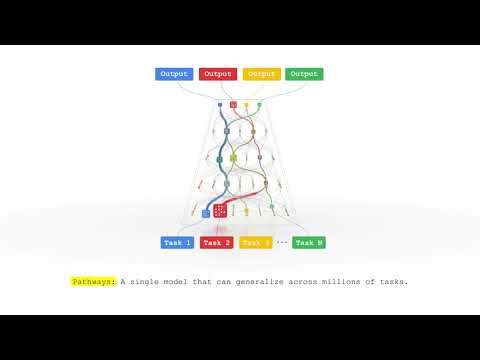
By optimizing the vertical synergy between JAX, XLA, and their eighth-generation TPU systems, Google stops caring whether Gemini wins a consumer popularity contest. They become the un-bypassable digital power grid. Every time a competitor runs a massive training run or handles enterprise-grade distributed inference, Google extracts pure economic rent from the substrate.
4. The BigQuery Multiplier: Data Gravity in the Middle Period
As outlined in the MoSSAIC thesis, intelligence in the Middle Period must natively adapt to where the substrate density is already established. In the modern enterprise, that substrate is proprietary data.
For global corporations with petabytes of historical data sitting inside Google BigQuery, moving that information out of Google’s ecosystem to feed an external model introduces a severe "Data Transfer Tax"—manifested as massive network egress fees, security vulnerabilities, and latency overhead.
By embedding the JAX compilation layer and XLA optimization pipeline directly and natively into the BigQuery engine, Google achieves the holy grail of software economics: unlimited scaling with zero data movement.
/* Conceptual layout of native substrate intelligence inside the data warehouse */
SELECT mossaic_predict(customer_matrix, model_state)
FROM enterprise_data.warehouse_core
WHERE execution_substrate = 'XLA_TPU_NATIVE';
Matrix transformations, model fine-tuning, and real-time autonomous inference execute elastically right where the data lives. Google returns to its "before" income model—highly predictable, massive enterprise software utility margins scaling purely on storage volume and compute density, completely insulated from consumer app churn.
5. Conclusion: Substrate Searching
The core realization of this post-mortem analysis is that these corporate tremors are not isolated management failures. They are macro-symptoms of the civilizational shift itself.
The evolutionary history of deep learning frameworks backs this trajectory. The industry shifted from the rigid static graphs of early TensorFlow to Chainer’s dynamic "Define-by-Run" architecture, which PyTorch eventually swallowed to capture academic research mindshare due to its ease of debugging. But as we reach the thermodynamic limits governing data complexity, sample size, and compute scale, dynamic runtime overhead and memory fragmentation become completely untenable for enterprise-level scaling.
The industry could return to a highly optimized, compiled static environments. Elite talent defection is fundamentally a form of "substrate searching." Researchers like David Silver starting Ineffable Intelligence, Sutskever launching independent labs (SSI) or Shazeer moving to OpenAI realize that to move the needle in the Intelligent Era, you can no longer build another consumer API or a bloated chatbot wrapper; you have to descend directly into the mathematical and physical substrate to bypass the physical boundaries of learning theory.
Google's potential strategic shift toward an infrastructure-and-compiler monopoly could be the first explicit acknowledgment of this transition by a tech giant. They have realized that the ultimate winners of the AI inversion will not be the ones building the flashiest consumer cars—it will be the entity that owns the mathematical compiler, the data warehouse, and the silicon tracks.